AppId is over the quota
AppId is over the quota
 Preparations for typhoon Rammasun are under way in the Philippines. Here, a resident of Las Pinas city, south of Manila, reinforces his roof. Photograph: EPAIn June 2013, at the beginning of the rainy season, the Philippine interior secretary announced that the government was aiming for a casualty-free typhoon season. Just five months later, the country was devastated by the deadliest storm in its history.
While the island state struggles to repair the damage wreaked by typhoon Haiyan, which killed more than 6,000 people, preparations have long been under way for the next season. The Philippine meteorological agency, Pagasa, recently announced the beginning of this year's rainy season and warned that 18 typhoons could hit the country by the end of December.
For the country's Climate Change Commission, discussions on how to prepare for the forthcoming year began nearly 12 months in advance. "Both national and local governments are bracing themselves. Typhoon Haiyan was such an enormous event," said the commission's vice-chairman and executive director, Lucile Sering.
The government also started preparing for the typhoon season early, and admitted to learning important lessons from Haiyan, or Yolanda as it is known in the Philippines. "We have learned a lot from typhoon Yolanda. Our prepositioned goods before were not enough, numbering about 20,000 to 30,000 food packs. We are now preparing at least 50,000 food packs," said Corazon Soliman, secretary for social welfare and development.
The arrival this week of typhoon Rammasun, the fiercest storm to threaten the Philippines since Haiyan, is poised to be the first real test of the country's disaster preparedness. The typhoon left at least 10 people dead and knocked out power in many areas on Wednesday but Manila was largely spared the typhoon's 150kph (93mph) wind.
Evacuations began in earnest – ferry services were suspended and schools closed in parts of Luzon island as the category-one storm headed towards the Philppine capital. On a storm scale of one to five, five is the most severe. Haiyan was a category-five "super-typhoon".
With each major storm that hits the Philippines, the majority of funding is usually focused on the relief effort, with not much cash left over to prepare for any future disasters. But non-governmental agencies say this approach is changing.
"Historically, there has been less support for response and intervention, education and child protection because many of the contributions and donations initially go to water, sanitation and health, as far as Unicef is concerned," said Nonoy Fajardo, a Unicef Philippines disaster risk-reduction expert. "For the first time, donor agencies are now more open to support emergency preparedness unlike before when the emphasis was more on emergency response."
Many Haiyan victims died because they failed to evacuate. A large number of people remained in their houses because they were not fully informed on the strength of the incoming typhoon and the consequences of a storm surge.
"No matter how good the system or capability of the government, at the end of the day, it's our people who are exposed to the weather and they have to know," said Alexander Pama, chief undersecretary of the National Disaster Risk Reduction and Management Council (NDRRMC).
As a result, a large component of preparation this year has been angled towards education. Training workshops are being offered to every level, from residents to first responders to local government officials. However, with experts warning of stronger typhoons to come, training sessions have had to take on a new element this year, educating people of the "new norms" that the Philippines can expect to experience as climate change causes typhoons to intensify.
"The first thing people need to be educated about is climate change. Filipinos are not new to typhoons, however, what they knew then may not be appropriate to things that are happening right now," Pama said.
Unicef Philippines has a programme on disaster-risk reduction, which recently included climate change adaptation. "This is the first time this part has been established," Fajardo said.
Funding has also poured into data collection. "One of the lessons learned is that the government [local and national] has to gather more data on hazard and risks and then strive to make everyone aware of it," said Roderic Salve, disaster management services manager at the Red Cross.
Project Noah (Nationwide Operational Assessment of Hazards) was set up in 2012 as a monitoring and early warning system. It has collated a series of interactive maps, which show the different areas of vulnerability from natural disasters such as typhoons. It is thus able to anticipate the impact of a hazard in a locality and implement the appropriate preparedness.
The NDRRMC is building a new operations centre, which is likely to be a "game-changer", according to Pama. The new 600sq m nerve centre will improve coordination between the different agencies, using satellite communications with real-time video, voice and data transmission.
The whole project, which will be funded mainly by local and international donors, is expected to cost P250-300m (£3.4-4m) and will be ready in time for next year's rainy season in April.
This year, a major focus has been on the consolidation of different government agency responses during a disaster. "Response differs between people so we need one standardised response," Sering said.
The government has introduced a system called Pre-Disaster Risk Assessment under which disasters are approached in three to four thematic areas: prevention and mitigation; preparedness; response and recovery; and rehabilitation. Each area has a different cluster of agencies acting on the issues, and representatives from each area meet regularly to ensure cohesion.
"The way a typhoon is being looked at this year is different," Pama said. "We are approaching this in a tactical way. Before, everyone looked at it with their respective mandate. There needs to be more emphasis on the right hand knowing what the left hand is doing. We're consolidating the different government groups."
View the original article here
AppId is over the quota
Preparations for typhoon Rammasun are under way in the Philippines. Here, a resident of Las Pinas city, south of Manila, reinforces his roof. Photograph: EPAIn June 2013, at the beginning of the rainy season, the Philippine interior secretary announced that the government was aiming for a casualty-free typhoon season. Just five months later, the country was devastated by the deadliest storm in its history.While the island state struggles to repair the damage wreaked by typhoon Haiyan, which killed more than 6,000 people, preparations have long been under way for the next season. The Philippine meteorological agency, Pagasa, recently announced the beginning of this year's rainy season and warned that 18 typhoons could hit the country by the end of December.
For the country's Climate Change Commission, discussions on how to prepare for the forthcoming year began nearly 12 months in advance. "Both national and local governments are bracing themselves. Typhoon Haiyan was such an enormous event," said the commission's vice-chairman and executive director, Lucile Sering.
The government also started preparing for the typhoon season early, and admitted to learning important lessons from Haiyan, or Yolanda as it is known in the Philippines. "We have learned a lot from typhoon Yolanda. Our prepositioned goods before were not enough, numbering about 20,000 to 30,000 food packs. We are now preparing at least 50,000 food packs," said Corazon Soliman, secretary for social welfare and development.
The arrival this week of typhoon Rammasun, the fiercest storm to threaten the Philippines since Haiyan, is poised to be the first real test of the country's disaster preparedness. The typhoon left at least 10 people dead and knocked out power in many areas on Wednesday but Manila was largely spared the typhoon's 150kph (93mph) wind.
Evacuations began in earnest – ferry services were suspended and schools closed in parts of Luzon island as the category-one storm headed towards the Philppine capital. On a storm scale of one to five, five is the most severe. Haiyan was a category-five "super-typhoon".
With each major storm that hits the Philippines, the majority of funding is usually focused on the relief effort, with not much cash left over to prepare for any future disasters. But non-governmental agencies say this approach is changing.
"Historically, there has been less support for response and intervention, education and child protection because many of the contributions and donations initially go to water, sanitation and health, as far as Unicef is concerned," said Nonoy Fajardo, a Unicef Philippines disaster risk-reduction expert. "For the first time, donor agencies are now more open to support emergency preparedness unlike before when the emphasis was more on emergency response."
Many Haiyan victims died because they failed to evacuate. A large number of people remained in their houses because they were not fully informed on the strength of the incoming typhoon and the consequences of a storm surge.
"No matter how good the system or capability of the government, at the end of the day, it's our people who are exposed to the weather and they have to know," said Alexander Pama, chief undersecretary of the National Disaster Risk Reduction and Management Council (NDRRMC).
As a result, a large component of preparation this year has been angled towards education. Training workshops are being offered to every level, from residents to first responders to local government officials. However, with experts warning of stronger typhoons to come, training sessions have had to take on a new element this year, educating people of the "new norms" that the Philippines can expect to experience as climate change causes typhoons to intensify.
"The first thing people need to be educated about is climate change. Filipinos are not new to typhoons, however, what they knew then may not be appropriate to things that are happening right now," Pama said.
Unicef Philippines has a programme on disaster-risk reduction, which recently included climate change adaptation. "This is the first time this part has been established," Fajardo said.
Funding has also poured into data collection. "One of the lessons learned is that the government [local and national] has to gather more data on hazard and risks and then strive to make everyone aware of it," said Roderic Salve, disaster management services manager at the Red Cross.
Project Noah (Nationwide Operational Assessment of Hazards) was set up in 2012 as a monitoring and early warning system. It has collated a series of interactive maps, which show the different areas of vulnerability from natural disasters such as typhoons. It is thus able to anticipate the impact of a hazard in a locality and implement the appropriate preparedness.
The NDRRMC is building a new operations centre, which is likely to be a "game-changer", according to Pama. The new 600sq m nerve centre will improve coordination between the different agencies, using satellite communications with real-time video, voice and data transmission.
The whole project, which will be funded mainly by local and international donors, is expected to cost P250-300m (£3.4-4m) and will be ready in time for next year's rainy season in April.
This year, a major focus has been on the consolidation of different government agency responses during a disaster. "Response differs between people so we need one standardised response," Sering said.
The government has introduced a system called Pre-Disaster Risk Assessment under which disasters are approached in three to four thematic areas: prevention and mitigation; preparedness; response and recovery; and rehabilitation. Each area has a different cluster of agencies acting on the issues, and representatives from each area meet regularly to ensure cohesion.
"The way a typhoon is being looked at this year is different," Pama said. "We are approaching this in a tactical way. Before, everyone looked at it with their respective mandate. There needs to be more emphasis on the right hand knowing what the left hand is doing. We're consolidating the different government groups."
View the original article here

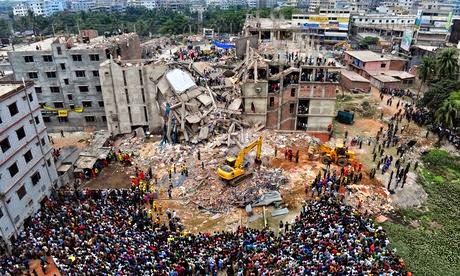
 A relative mourns at the site of the Rana Plaza building in Bangladesh. Photograph: Xinhua/Landov/Barcroft Media
 The Turkish prime minister, Recep Tayyip Erdogan, visits the coal mine in Soma. Photograph: Kayhan Ozer/AP