AppId is over the quota
Arbeiten in Bekleidungsfabriken hat Mädchen und junge Frauen können steuern, wie sie ihre Einkünfte verbringen, sagt Sajeda Amin. Foto: David Levene
Letzte Woche war der erste Jahrestag des Zusammenbruchs der Rana-Plaza in Dhaka, Bangladesch, die mehr als tausend Menschen getötet und verletzt mehr als 2.500. Viele von denen, die getötet und verletzt wurden Migranten Heranwachsende Mädchen, die in ein Kleidungsstück-Fabrik in dem Gebäude beschäftigt waren. Viele der Überlebenden sind schlecht verletzt oder verstümmelt und nicht in der Lage, wieder um zu arbeiten. Dieses schreckliche Ereignis mit den Bedingungen von Kleidungsstück Fabrikarbeiter in Bangladesch erlebt in den Blickpunkt gerückt und Aufrufe zur Verbesserung der Sicherheit in Bangladesch Bekleidungsfabriken zog. Die Tragödie führte auch einige fordern Kleidung in Bangladesch zu boykottieren.
Ich glaube nicht, dass ein Boykott den gewünschten Effekt haben würde. Obwohl ich glaube, dass die Forderung nach einer wohlmeinenden, in Wirklichkeit sind, wäre es einen wichtiger Schritt zurück für die Rechte und Lebensbedingungen von Frauen und Mädchen darstellen. Unvollkommen, wie es ist, der Bekleidungsindustrie in Bangladesch, das jetzt fast 4 Millionen Menschen beschäftigt, bleibt die einzig gangbare Arbeit-Option für viele junge Frauen. Bangladesh ist an zweiter Stelle nur nach China in Bezug auf das Volumen der Kleidungsstücke hergestellt. Einer Schätzung zufolge beschäftigt 12 % der Frauen im Alter von 15 bis 30 im Land. Bis vor kurzem waren Löhne noch weniger als ein Viertel derjenigen, die in China bezahlt. Mit neuen Mindestlohn-Gesetzgebung im Dezember 2013 in Kraft gesetzt sie haben fast verdoppelt auf £40 pro Monat von £23 – aber weiterhin die Hälfte Chinas. Diese Lohnsteigerungen und neue Sicherheitsbestimmungen übersetzt in eine Steigerung von 17P pro Kleidungsstück auf die Produktionskosten, laut Wall Street Journal.
Der Grund, warum die Löhne niedrig für Garment Workers in Bangladesch geblieben ist, dass Frauen, die in diesem Sektor arbeiten nur wenige Optionen. In einer Umfrage haben, die wir festgestellt, dass ländliche Mädchen selten Vollzeitbeschäftigung zu finden und deutlich verdienen, weniger als die Einsteiger Löhne in der Bekleidungsbranche.
Arbeitsmöglichkeiten für Frauen in der Bekleidungsindustrie sind aus mehreren Gründen wichtig. Vor dem Beginn der Bekleidungsbranche Einstellung von Frauen in den 1970er Jahren war es ungewöhnlich, dass Frauen ihre eigenen im öffentlichen Raum in Bangladesch gehen auf. Aber in den 90er Jahren mehr als 1 Million Frauen Arbeitsplätze in der Bekleidungsindustrie gefunden hatte. Nicht nur waren sie sichtbar in der Belegschaft, sie waren im öffentlichen Raum sichtbar, während sie zum und vom Arbeitsplatz gingen. Die sichtbare Präsenz der so viele Frauen war transformative. Heute gibt es weit weniger Stigma für junge Frauen auf den Straßen von Dhaka zu sehen.
Meine Forschung auf der Bekleidungsindustrie in Bangladesch verweist auf eine andere Art von Transformation: Arbeiten schafft eine andere Art der Adoleszenz. In Bangladesch heiraten Frauen in ländlichen Regionen, die nicht arbeiten bald nach der Pubertät. Arbeitende Frauen neigen dazu, später zu heiraten. Beschäftigung erstellt eine Phase des Übergangs für diese Mädchen und ermöglicht es ihnen nach Verzögerung Heirat und Kinderwunsch.
Darüber hinaus hat der Bekleidungsindustrie wie junge Frauen in Bangladesch denken über ihre Möglichkeiten, Leben verwandelt. Im großen und ganzen kommen Mädchen und jungen Frauen, die in der Bekleidungsindustrie arbeiten aus extrem benachteiligten Familien. Sie kommen aus den ärmsten Haushalten in den ärmsten Gemeinden in Bangladesch, diejenigen, die besonders anfällig für Umweltkatastrophen sind. Sie kommen aus großen Familien und oft aus Familien, deren Väter nicht arbeitsfähig sind. Einen Lohn verdienen hilft junge Frauen, die für eine Vielzahl von Szenarien Leben, Ausgleich von lang- und kurzfristigen Ziele vorbereiten.
Frauen, die in Bangladesh Bekleidungs-Industrie Bericht zu arbeiten, haben ein hohes Maß an Kontrolle über die Verwendung ihrer Erträge. Sie Berichten eine immense Gefühl von stolz über die Beiträge, die sie zu ihren Familien machen können. Sie haben eine starke Neigung, ihr Geld für die zukünftigen Bedürfnisse zu speichern und in der Ausbildung ihrer Geschwister und Kinder zu investieren.
In einer jüngsten Podiumsdiskussion habe ich für eine alternative Antwort auf die Tragödie von Rana Plaza plädiert. Statt Risiko Ich empfehle die Errungenschaften von jungen Frauen in Bangladesch, die größtenteils von der Bekleidungsindustrie erleichtert wurden, Unterstützung von Initiativen, die auf diese Gewinne aufbauen und erweitern die Möglichkeiten für Mädchen und junge Frauen.
Sajeda Amin ist senior Associate bei der Bevölkerung Rat. Folgen Sie @Pop_Council auf Twitter.
Mitglied in der Community von globalen Entwicklung Fachleuten und Experten.Werden Sie Mitglied GDPNmehr Geschichten wie diese direkt in Ihren Posteingang erhalten
View the original article here
Showing posts with label Plaza. Show all posts
Showing posts with label Plaza. Show all posts
Saturday, June 28, 2014


Friday, June 27, 2014
Rana Plaza disaster: call for UK retailers about compensation fund press
Aerial view of the construction site of Rana Plaza, after it in April 2013, crashed in the deaths of more than 1.100. Photo: Munir Uz Zaman/AFP/Getty Images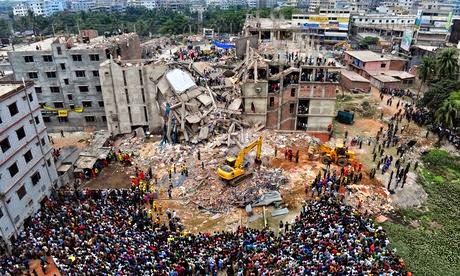
The TUC calls for the British Government ramp pressure on dealers who produce clothes in Bangladesh to help reduce a relief fund for the victims of the Rana Plaza, the factory.Next week a high-level international meeting of the Organization for economic cooperation and development (OECD) in Paris, will discuss Rana Plaza after the disaster in which more than 1,100 people died and many others were injured.
More than a year after the factory building reduced, nearly 17 million $ (£10 m), been killed paid into a compensation fund supported by the International Labour Organisation well behind the $40 m, that which it is aimed, increase to support injured and the families of those.
Primark donated by far the largest share of these resources while other companies have a presence in Rana Plaza, including Chilean Britain and Italy Benetton admitted, managed to make every contribution.
Frances O'Grady, General Secretary of the TUC is the International Development Secretary, Justine greening, calls use the meeting to pressure written on British companies sourcing from Bangladesh, the funds to pay.
"Families that strongly, be affected by this disaster without the income or medical payments, which they deserve and need, for their lives to rebuild," she wrote.
The majority of the victims claims should be processed in the next few weeks. O'Grady, said it would be impossible to cover their payments over the first installment, if not more money.
The Government could not confirm whether greening or Alan Duncan, the Minister of State for the Department for international development (DfiD), which would attend OECD Paris.
However a spokesman for DfiD, the Summit to the underline the need for companies to use a "serious contribution" to the compensation fund.
"British companies have to stop and wonder if they do everything they can." They have the power to bring about profound and positive change, and we will continue every opportunity to encourage them, to this Act", he said.
View the original article here
Wednesday, June 25, 2014
Bangladesh garment workers still vulnerable a year after Rana Plaza
AppId is over the quota
AppId is over the quota
Bangladeshi activists and relatives of Rana Plaza victims mark first anniversary of disaster. Photograph: Munir Uz Zaman/AFP/Getty Images
Fewer than 300 of Bangladesh's 5,000 clothing factories have allowed in trade unions, as workers' rights remain under pressure a year on from the Rana Plaza building collapse in which more than 1,100 people were killed.
Amirul Haque Amin, president of the country's National Garment Workers' Federation, said his union had doubled the number of factories where it operated during the past 12 months to 42, while the total number of factories with any union representation had more than doubled to about 237. However, many workers were still vulnerable to exploitation despite unprecedented international efforts in the wake of one of the world's biggest industrial disasters.
"I think it is really hard to say that an ethical factory exists in Bangladesh at present. As a trade union we cannot say that. We can simply say that factories are moving towards better conditions," said Amin, who took part in protests on Oxford Street in London on Thursday to mark the anniversary of the Rana Plaza disaster and put pressure on companies that have yet to pay into a compensation fund for victims.
His comments tally with a report by New York University's Centre for Business and Human Rights which says: "The government of Bangladesh lacks the resources, administrative capacity, and often the will to protect workers in garment factories. The labour law remains weak and enforcement weaker still. Local industry enjoys outsized influence in the country's politics, which impedes the establishment and enforcement of rigorous regulation." Authors Sarah Labowitz and Dorothée Baumann-Pauly say "major corruption challenges" mean that foreign governments are shying away from providing the finance needed to improve Bangladesh's infrastructure, such as a weak power network which exacerbates the risk of factory fires.
Amin said that even with a 77% increase in Bangladesh's minimum wage last year, workers were struggling to survive on 5,300 taka (£41) a month, while many factories still required improvements to bring them up to basic safety standards.
"If multinational brands really want to improve the life of the workers then they can take the initiative. If representatives of the buyers, the factories and the workers sit down together they can work out a better price and some kind of mechanism so workers can get the benefit," Amin said.
Further evidence has emerged in an Italian documentary of poor working conditions in Bangladeshi factories. The Presa Diretta programme filmed factories working for Benetton's Olimpias sourcing division using young workers and continuing unsafe working practices months after more than 1,100 workers were killed and 2,000 injured at Rana Plaza. Benetton is one of a number of retailers linked to Rana Plaza that have yet to pay into an international compensation fund backed by the UN's International Labour Organisation.
The documentary makers filmed locked factory gates at two facilities where they saw Olimpias branded clothing being made. One factory owner admitted that employees could start work as young as 13 and the other said he used workers aged 15 or 16. A production manager for Olimpias was secretly filmed defending the employment of children in its factories, saying: "At least they are not on the streets."
The Olimpias representatives admitted that they continued to make orders despite knowing that few factories in the country had external fire escapes, seen as a basic safety requirement by most experts. One said: "None of the buildings here have outside fire exits. It's not my fault."
Benetton said that comments by its employees and factory owners were "taken completely out of context and with the objective of constructing a specifically negative message about us".
Both factories filmed by Presa Diretta were on the list of facilities supplying retailers that have signed up to a legally-binding factory safety deal, which included inspections. Benetton had signed up to the deal and admitted it had added the factories to the list, as it was legally obliged to do. It also said it had commissioned independent audits of them.
"We will move to immediately stop working with them if we find that they are not in compliance with our code of conduct," a spokesman for the company said.
However, he added that Benetton did not recognise the facilities filmed in the documentary.
View the original article here
AppId is over the quota
Bangladeshi activists and relatives of Rana Plaza victims mark first anniversary of disaster. Photograph: Munir Uz Zaman/AFP/Getty Images

Fewer than 300 of Bangladesh's 5,000 clothing factories have allowed in trade unions, as workers' rights remain under pressure a year on from the Rana Plaza building collapse in which more than 1,100 people were killed.
Amirul Haque Amin, president of the country's National Garment Workers' Federation, said his union had doubled the number of factories where it operated during the past 12 months to 42, while the total number of factories with any union representation had more than doubled to about 237. However, many workers were still vulnerable to exploitation despite unprecedented international efforts in the wake of one of the world's biggest industrial disasters.
"I think it is really hard to say that an ethical factory exists in Bangladesh at present. As a trade union we cannot say that. We can simply say that factories are moving towards better conditions," said Amin, who took part in protests on Oxford Street in London on Thursday to mark the anniversary of the Rana Plaza disaster and put pressure on companies that have yet to pay into a compensation fund for victims.
His comments tally with a report by New York University's Centre for Business and Human Rights which says: "The government of Bangladesh lacks the resources, administrative capacity, and often the will to protect workers in garment factories. The labour law remains weak and enforcement weaker still. Local industry enjoys outsized influence in the country's politics, which impedes the establishment and enforcement of rigorous regulation." Authors Sarah Labowitz and Dorothée Baumann-Pauly say "major corruption challenges" mean that foreign governments are shying away from providing the finance needed to improve Bangladesh's infrastructure, such as a weak power network which exacerbates the risk of factory fires.
Amin said that even with a 77% increase in Bangladesh's minimum wage last year, workers were struggling to survive on 5,300 taka (£41) a month, while many factories still required improvements to bring them up to basic safety standards.
"If multinational brands really want to improve the life of the workers then they can take the initiative. If representatives of the buyers, the factories and the workers sit down together they can work out a better price and some kind of mechanism so workers can get the benefit," Amin said.
Further evidence has emerged in an Italian documentary of poor working conditions in Bangladeshi factories. The Presa Diretta programme filmed factories working for Benetton's Olimpias sourcing division using young workers and continuing unsafe working practices months after more than 1,100 workers were killed and 2,000 injured at Rana Plaza. Benetton is one of a number of retailers linked to Rana Plaza that have yet to pay into an international compensation fund backed by the UN's International Labour Organisation.
The documentary makers filmed locked factory gates at two facilities where they saw Olimpias branded clothing being made. One factory owner admitted that employees could start work as young as 13 and the other said he used workers aged 15 or 16. A production manager for Olimpias was secretly filmed defending the employment of children in its factories, saying: "At least they are not on the streets."
The Olimpias representatives admitted that they continued to make orders despite knowing that few factories in the country had external fire escapes, seen as a basic safety requirement by most experts. One said: "None of the buildings here have outside fire exits. It's not my fault."
Benetton said that comments by its employees and factory owners were "taken completely out of context and with the objective of constructing a specifically negative message about us".
Both factories filmed by Presa Diretta were on the list of facilities supplying retailers that have signed up to a legally-binding factory safety deal, which included inspections. Benetton had signed up to the deal and admitted it had added the factories to the list, as it was legally obliged to do. It also said it had commissioned independent audits of them.
"We will move to immediately stop working with them if we find that they are not in compliance with our code of conduct," a spokesman for the company said.
However, he added that Benetton did not recognise the facilities filmed in the documentary.
View the original article here
Monday, June 23, 2014
Establishment of trade unions in Bangladesh will prevent that a further Rana Plaza
 A Bangladeshi of mourner and relatives of the victims of the Rana Plaza building collapse. Photo: Munir uz Zaman/AFP/Getty Images
It is now just over a year since the collapse of the Rana Plaza-factory complex in Dhaka, Bangladesh, 1,138 people killed and around 2,500 others injured. Led uni work global international trade unions and IndustriALL with trade unions such as the national garment workers Federation (NGWF) of the agreement on fire and building safety in Bangladesh to develop.
Multinational companies such as Inditex (owns the Zara) were put under enormous pressure to sign the agreement. Some 160 companies registered and the agreement now includes 1,500 factories and has completed its first round of tests. This is a serious piece of legislation, which has never before been in the fashion industry. It is a legally binding five-year plan, obliged to announce what factories, companies they use.
Also in the implementation of the agreement, there is still a long way to go before Bangladesh garment industry are fully protected in accordance with international standards and to workers.
Activists agree that the key to the progress of freedom of Association and organising the dress workers. President of the NGWF Amirul Haque Amin is insistent that "without organising will not be changed in terms of ready made garment (RMG)". Christy Hoffman, Deputy Secretary General of which global Union UNI agrees: "there is no such thing as a truly safe factory without informed and committed workers in the factory with an independent voice to force problems and solutions."
The population of Bangladesh is about 164 million, to work, 4 million in the clothing industry. A new report (PDF) of the International Labour Office says: "96 new unions in the RMG sector in the year 2013, 222, with 34 federations that bring the total number of trade unions in the sector have been registered".
This increase of registrations occurred, because an easing in restrictions and shows continue to organize mood among the workers. However, despite a large number of trade unions in the area, too few workers are members, so that they are vulnerable to abuse in the workplace and unsafe conditions. Even a larger Union as the NGWF is large obstacles faced: "to a Union with the labour Department, you need to register one-third of the workforce, register" said Amirul Haque. "It is very difficult because first of all in a workplace of 10,000 people organize 3,000 workers must log on." Setting of workers must be a largely secret process as trade unionists face harassment and violence is raised also remain.
Amirul Haque says that international unions a role in two long-term capacity building and expanding into new regions can play. Hoffman says this as one of the main objectives of the Convention: "the agreement foresees inspections recorded and educated are, both in the security practices and the recovery process of the workers." Health and safety committees will be working factories in accord. Workers hung on the right to refuse unsafe activities, and this right to a robust appeal mechanism."
Hoffman identified one crucial difference between the accord and the rival deal, the Alliance for Bangladesh worker safety, which is led by Walmart and gap: "employees are the heart of every element of a chord - its negotiation, governance, implementation and enforcement. In a departure from the past, and in contrast to the Alliance, the accord is not a "brand only" or also "multi stakeholder"-initiative. The agreement reflects (globally and locally). a binding agreement between trademark and trade unions"
Ian Spaulding, senior advisor of the Alliance explained by e-Mail which will work with local trade unions in Bangladesh and the trade union representatives on the alliances Board of advisors and subcommittees are. Yet the NATO leadership is dominated by earnings from companies such as Wal-Mart and it can not be argued that it made workers.
John Hilary is the Managing Director of want, which supports the agreement was on. Hilary is clear that ensuring the trade unions in the global South to continue, their work is vital and indicates that this is 'Solidarity in action' not charity. "Together with campaigns to challenge, the brands and retailers, that is to control the global supply chains, strength the best hope save local Union long-term improvements for garment workers in Bangladesh."
Worked on want recycling for aid and international development have in addition to textile (morning) capacity building in Bangladesh in the last decade. You have a deal function only for the UIA Charitable Foundation (the nonprofit wing of the Union insurance company UIA insurance) gave to three years funding for leadership training specifically for female garment workers in Bangladesh.
Amazingly had Rana Plaza has been tested twice (by Primark) and both times sure declared. Only unionized garment supports employees themselves through global unions and backed up by legislation, to ensure correct, that Rana Plaza must never happen again.
The H & M fashion hub is financed. All content advertising is editorially independent marked except pieces feature. Learn more here.
Join the community of sustainability professionals and experts. You are a Member of the GSB , get more stories like this direct to your Inbox
View the original article here
Saturday, June 21, 2014
Bangladesh social workers lobby for better labour rights in wake of Rana Plaza disaster
AppId is over the quota
AppId is over the quota
 A relative mourns at the site of the Rana Plaza building in Bangladesh. Photograph: Xinhua/Landov/Barcroft Media
Last April, 27-year-old Mushamat Begum was at her sewing machine on the fifth floor of the Rana Plaza building when it collapsed in Bangladesh. More than 1,100 of her co-workers were killed, and she was later pulled from the rubble with a leg injury.
Speaking about the factory's condition before the collapse, she said: "Our working conditions are horrible. We basically never get a day off. If there's a death in the family, the bosses say, 'Well, there's nothing anyone can do about that. If someone's dead, he's dead'.
"We only get money if we're at the factory. There's no paid vacation. There are always people watching over us. They scold us when we have to go to the bathroom. They're there all the time and we're not allowed to take any breaks. Now and then they'll slap one of us."
Begum's experience is a direct consequence of living without national social protection systems and legally binding worker rights, within the context of an international trade system based on inequality and exploitation.
After the collapse of the Rana Plaza building, I spoke to Repon Chowdhury, general secretary of the Bangladesh Association of Social Workers. I asked him what was the core role of social work in a country of extreme poverty where workers are systemically exploited by higher income countries because of Bangladesh's cheap labour.
He explained that the struggle to improve labour rights and conditions is at the heart of social work practice in Bangladesh. "Social workers are a very important advocate for the fundamental rights of workers, and for the development of social protection systems on a daily basis," he said. "We do what we can to reduce child labour, creating safer conditions in the workplace and promoting gender equity and healthy environments for living."
However, he added that "without adequate labour rights enforced at the global level there will be continued poverty, human indignity and sufferings at workplaces".
Establishing agreed international labour rights is a key issue for eliminating poverty in Bangladesh and elsewhere. Repon explained that many people inside Bangladesh fear that, if their country advances labour laws in isolation, and in the absence of enforced international standards, the result could be the loss of jobs and export earnings that could significantly increase poverty. This would lead to wide-scale forced migration and social unrest. Instead, the answers lie in "international solidarity and promoting core labour standards and the elimination of poverty on a global scale".
The accord on fire and building safety in Bangladesh, which 150 international companies have signed up to, has been hailed as a potential solution. But Repon said it simply offers "baby steps" towards regulation.
"It has to be recognised that, apart from the failures of the companies, the Bangladeshi state also lacks the structures to enforce workplace safety," he said. "There should be detailed plans to improve workplace conditions by providing adequate resources and employing expert staff. Social workers would like to see the government taking a central role in ensuring the safety of workers."
While fire and building safety are the critical issues in Bangladesh, they are not the only health and safety problems in the workplace. Workers also face a range of occupational health matters that include respiratory ailments due to dust, and musculo-skeletal disorders due to long working hours and physically awkward conditions. "The time has come to create a universal social protection floor for all workers around the globe," says Repon.
Mushamat Begum was employed at the Rana Centre on a base full-time wage of 4,000 taka (about €39) a month. The rent for the one room that houses herself, her husband and two children is 1,850 taka (€18) a month. Her children sleep on the floor and her family shares a kitchen and toilet with seven other families. Her husband drives a rickshaw and earns very little.
Even if the Bangladesh accord could be implemented in the remaining four-year time frame, it won't stop Begum from being worked to death by the age of 60. It will not stop her children from getting waterborne diseases, such as hepatitis and typhoid fever, because of inadequate systems to ensure clean water.
The most realistic option that will enable her, and the billions of others like her, to find a decent future is to implement worldwide agreements that establish international labour laws. These would put workers and governments on an equitable footing and give them the chance to establish adequate social protection.
International regulation based on social justice is not prevented by a lack of resources, or by complexity of administration: its negotiation, development and phased implementation is a question of political resolve from governments and world leaders.
The consequences of not introducing such measures condemn more than half the world's population to the conditions experienced by Begum. Social work in Bangladesh, like in all countries, is about the transformation of society to enable people to live sustainably, and in dignity.
The International Federation of Social Workers
has joined forces with 90 other international NGOs in calling for social protection to be included in the post-2015 development goals.
Why not join our social care community? Becoming a member of the Guardian Social Care Network means you get sent weekly email updates on policy and best practice in the sector, as well as exclusive offers. Sign up – for free – online here.
View the original article here
AppId is over the quota
A relative mourns at the site of the Rana Plaza building in Bangladesh. Photograph: Xinhua/Landov/Barcroft MediaLast April, 27-year-old Mushamat Begum was at her sewing machine on the fifth floor of the Rana Plaza building when it collapsed in Bangladesh. More than 1,100 of her co-workers were killed, and she was later pulled from the rubble with a leg injury.
Speaking about the factory's condition before the collapse, she said: "Our working conditions are horrible. We basically never get a day off. If there's a death in the family, the bosses say, 'Well, there's nothing anyone can do about that. If someone's dead, he's dead'.
"We only get money if we're at the factory. There's no paid vacation. There are always people watching over us. They scold us when we have to go to the bathroom. They're there all the time and we're not allowed to take any breaks. Now and then they'll slap one of us."
Begum's experience is a direct consequence of living without national social protection systems and legally binding worker rights, within the context of an international trade system based on inequality and exploitation.
After the collapse of the Rana Plaza building, I spoke to Repon Chowdhury, general secretary of the Bangladesh Association of Social Workers. I asked him what was the core role of social work in a country of extreme poverty where workers are systemically exploited by higher income countries because of Bangladesh's cheap labour.
He explained that the struggle to improve labour rights and conditions is at the heart of social work practice in Bangladesh. "Social workers are a very important advocate for the fundamental rights of workers, and for the development of social protection systems on a daily basis," he said. "We do what we can to reduce child labour, creating safer conditions in the workplace and promoting gender equity and healthy environments for living."
However, he added that "without adequate labour rights enforced at the global level there will be continued poverty, human indignity and sufferings at workplaces".
Establishing agreed international labour rights is a key issue for eliminating poverty in Bangladesh and elsewhere. Repon explained that many people inside Bangladesh fear that, if their country advances labour laws in isolation, and in the absence of enforced international standards, the result could be the loss of jobs and export earnings that could significantly increase poverty. This would lead to wide-scale forced migration and social unrest. Instead, the answers lie in "international solidarity and promoting core labour standards and the elimination of poverty on a global scale".
The accord on fire and building safety in Bangladesh, which 150 international companies have signed up to, has been hailed as a potential solution. But Repon said it simply offers "baby steps" towards regulation.
"It has to be recognised that, apart from the failures of the companies, the Bangladeshi state also lacks the structures to enforce workplace safety," he said. "There should be detailed plans to improve workplace conditions by providing adequate resources and employing expert staff. Social workers would like to see the government taking a central role in ensuring the safety of workers."
While fire and building safety are the critical issues in Bangladesh, they are not the only health and safety problems in the workplace. Workers also face a range of occupational health matters that include respiratory ailments due to dust, and musculo-skeletal disorders due to long working hours and physically awkward conditions. "The time has come to create a universal social protection floor for all workers around the globe," says Repon.
Mushamat Begum was employed at the Rana Centre on a base full-time wage of 4,000 taka (about €39) a month. The rent for the one room that houses herself, her husband and two children is 1,850 taka (€18) a month. Her children sleep on the floor and her family shares a kitchen and toilet with seven other families. Her husband drives a rickshaw and earns very little.
Even if the Bangladesh accord could be implemented in the remaining four-year time frame, it won't stop Begum from being worked to death by the age of 60. It will not stop her children from getting waterborne diseases, such as hepatitis and typhoid fever, because of inadequate systems to ensure clean water.
The most realistic option that will enable her, and the billions of others like her, to find a decent future is to implement worldwide agreements that establish international labour laws. These would put workers and governments on an equitable footing and give them the chance to establish adequate social protection.
International regulation based on social justice is not prevented by a lack of resources, or by complexity of administration: its negotiation, development and phased implementation is a question of political resolve from governments and world leaders.
The consequences of not introducing such measures condemn more than half the world's population to the conditions experienced by Begum. Social work in Bangladesh, like in all countries, is about the transformation of society to enable people to live sustainably, and in dignity.
The International Federation of Social Workers
has joined forces with 90 other international NGOs in calling for social protection to be included in the post-2015 development goals.
Why not join our social care community? Becoming a member of the Guardian Social Care Network means you get sent weekly email updates on policy and best practice in the sector, as well as exclusive offers. Sign up – for free – online here.
View the original article here
Subscribe to:
Posts (Atom)